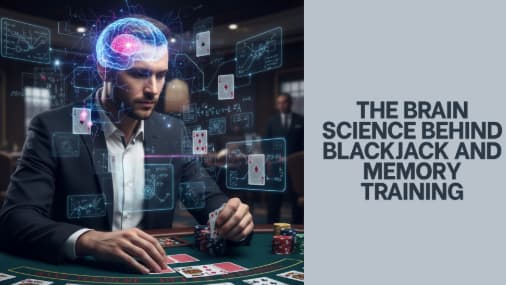
The felt-covered tables of blackjack games might seem an unlikely venue for cognitive enhancement, yet neuroscience reveals a fascinating truth: the mental demands of this classic card game mirror many techniques used in professional memory training. While players focus on beating the dealer, their brains are simultaneously engaging in a complex workout that strengthens neural pathways and enhances cognitive function.
Understanding how blackjack activates specific brain regions offers valuable insights into memory formation, decision-making, and the remarkable plasticity of the human mind. This connection between gaming and cognitive science demonstrates how strategic card play can serve as both entertainment and mental exercise.
How Blackjack Activates Your Brain’s Neural Networks
The Prefrontal Cortex and Strategic Decision-Making
Every hand of blackjack triggers intense activity in the prefrontal cortex, the brain’s executive control center. This region orchestrates complex decision-making by weighing probabilities, assessing risks, and calculating potential outcomes. When deciding whether to hit, stand, double down, or split, players activate the same neural circuits used in high-level strategic thinking.
The prefrontal cortex doesn’t work in isolation. It communicates with other brain regions to process the dealer’s up card, evaluate your hand total, and recall basic strategy guidelines. This constant evaluation of risk versus reward creates a dynamic mental challenge that keeps the prefrontal cortex highly engaged throughout gameplay.
Working Memory in Action
Blackjack places significant demands on working memory, the cognitive system responsible for temporarily holding and manipulating information. Players must track multiple variables simultaneously: cards that have been played, the current count, remaining deck composition, and optimal strategy decisions.
Research shows that working memory has limited capacity, typically holding only about seven pieces of information at once. Blackjack pushes these boundaries by requiring players to update their mental models continuously as new cards appear. This constant refreshing of working memory closely resembles exercises used by memory athletes during training.
The Neuroscience of Card Counting and Pattern Recognition
Visual Processing and Pattern Detection
The visual cortex springs into action the moment cards hit the table. Beyond simple recognition, the brain engages in sophisticated pattern detection, identifying sequences and relationships between cards. These visual processing skills involve rapid neural firing across multiple brain regions that specialize in shape recognition, number processing, and spatial awareness.
Card counters develop enhanced pattern recognition abilities through practice. The brain learns to quickly categorize cards into high and low values, creating mental shortcuts that speed up processing. This automatic pattern detection develops through repeated exposure, demonstrating the brain’s remarkable ability to optimize frequently performed tasks.
The Role of the Hippocampus
The hippocampus, crucial for memory formation and retrieval, plays a central role in blackjack proficiency. This seahorse-shaped structure helps consolidate short-term observations into longer-term strategic knowledge. As players gain experience, the hippocampus encodes successful strategies and recalls them during similar situations.
Neuroimaging studies reveal that repeated practice strengthens connections between the hippocampus and other brain regions. Each blackjack session essentially creates new memory traces, and regular play reinforces these neural pathways. This process mirrors how musicians or athletes develop muscle memory through consistent practice.
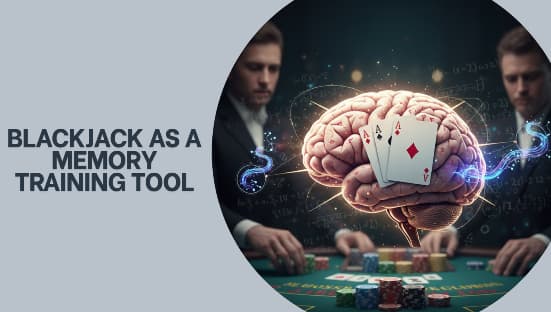
Blackjack as a Memory Training Tool
Cognitive Benefits of Strategic Card Games
Beyond the immediate excitement of gameplay, blackjack offers measurable cognitive benefits. Regular players often report improved attention span, as the game demands sustained focus over extended periods. Unlike passive entertainment, each decision requires active mental engagement, training the brain to maintain concentration despite distractions.
The fast-paced nature of blackjack also enhances mental agility. Players must make quick decisions under pressure, processing information rapidly and adjusting strategies on the fly. This cognitive flexibility translates to improved problem-solving abilities in everyday situations, as the brain becomes more adept at switching between different mental tasks.
Neuroplasticity and Brain Adaptation
The brain’s ability to reorganize itself, known as neuroplasticity, underlies the cognitive benefits of blackjack. Each game session stimulates the formation of new neural connections and strengthens existing pathways. This adaptation occurs throughout life, though it’s particularly pronounced when learning new skills or engaging in challenging mental activities.
Regular strategic gameplay can help maintain cognitive function as we age. The principle of “use it or lose it” applies to brain health: neurons that fire together wire together, while unused connections gradually weaken. Blackjack provides a engaging way to keep neural networks active and robust.
Memory Techniques Used by Professional Blackjack Players
Chunking and Information Processing
Professional players employ chunking, a powerful memory technique where large amounts of information are grouped into manageable units. Instead of remembering individual cards, skilled players chunk them into categories: high cards, low cards, and neutral values. This reduces cognitive load and frees up working memory for strategic thinking.
Chunking isn’t unique to blackjack. It’s the same technique that allows us to remember phone numbers in groups rather than as individual digits. By applying this method to card counting, players demonstrate how memory strategies can enhance performance in complex tasks.
The Method of Loci and Spatial Memory
Some advanced players utilize visualization techniques similar to the method of loci, an ancient memory strategy. This involves creating mental images or “memory palaces” where information is stored at specific locations. While not all blackjack players use this specific technique, the spatial memory component of tracking cards across multiple hands engages similar neural systems.
Mental visualization activates the parietal cortex, which processes spatial relationships. By creating vivid mental representations of card sequences or strategy charts, players tap into the brain’s powerful visual memory systems, which often retain information more effectively than verbal memory alone.
Comparing Blackjack Training to Traditional Memory Exercises
Traditional memory exercises often involve repetitive drills: memorizing number sequences, word lists, or playing matching games. While effective, these activities can feel monotonous. Blackjack offers similar cognitive benefits within an engaging, dynamic context that maintains motivation through entertainment value.
The game-based approach to cognitive training provides immediate feedback and natural rewards. Successful plays produce positive reinforcement, encouraging continued practice. This emotional engagement strengthens memory formation, as the amygdala’s involvement in emotionally charged experiences enhances consolidation of memories in the hippocampus.
The social element of blackjack also differentiates it from solitary memory exercises. Playing with others adds social cognition demands, requiring players to read body language and manage emotions while maintaining strategic focus.
Conclusion
The intersection of blackjack and neuroscience reveals how strategic card games engage multiple cognitive systems simultaneously. From activating the prefrontal cortex’s decision-making networks to challenging working memory and strengthening hippocampal connections, blackjack provides a comprehensive mental workout disguised as entertainment.
While it shouldn’t replace dedicated memory training for those seeking peak cognitive performance, blackjack demonstrates that brain exercise can be both effective and enjoyable. The neural pathways strengthened through strategic gameplay extend beyond the casino floor, potentially enhancing attention, memory, and decision-making in daily life.
As research continues to illuminate the connections between gaming and cognitive health, blackjack stands as a compelling example of how challenging our brains through strategic play can contribute to maintaining mental sharpness throughout our lives.